
Power system studies
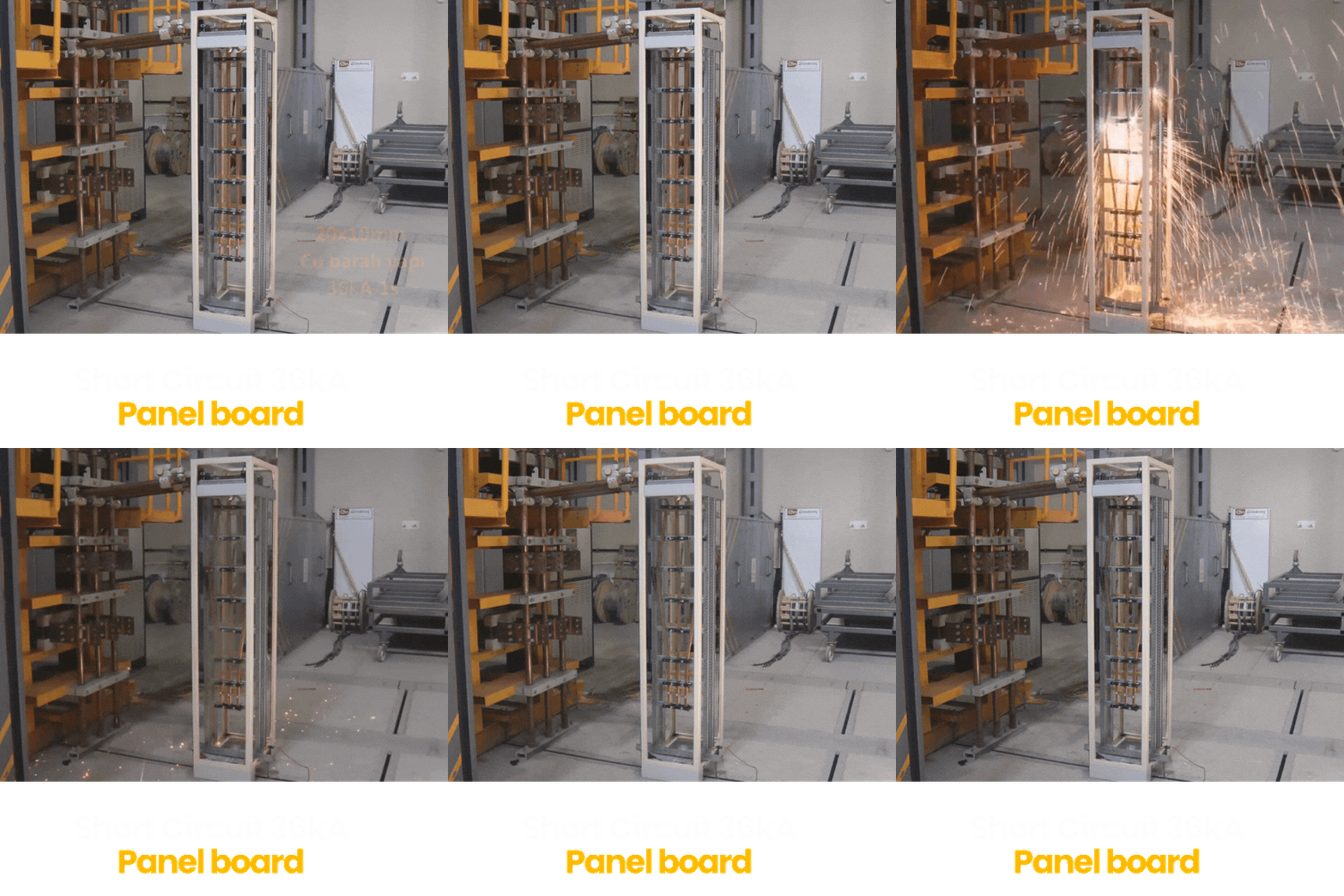
Short circuit current is an over-current resulting from a short circuit in an electric system. In simple terms, it is a high current that appears in an electrical installation under fault conditions. This is not part of normal operation. A short circuit current study involves determining the values of all fault currents expected in both existing and planned electrical installations. This is usually done under multiple network configurations and operation modes, such as:
- AC/DC Grid and generator operation
- Uninterruptible Power Supply (UPS) mode
- Photovoltaic (PV) panels with Battery Energy Storage Systems (BESS)
- Parallel transformers operation
- And more…
By understanding these potential fault currents, engineers can design electrical systems to be safe, protecting both the infrastructure and the people who rely on it.
Read more...
Why do I need it?
Simple answer is to design properly electrical installation and avoid catastrophic equipment failures and fault conditions. Once we have fault current values, we can:- size electrical cables
- size electrical switchgears, panel boards, MCC's…
- size circuit breakers against short circuit currents
- adjust properly protective device settings
- allows us to verify existing equipment short circuit ratings
- allows to perform Arc Flash Risk Assessment
When do I need it?
Every electrical installation should have Short Circuit Current Study documented. Usually we will need it for:- new electrical installations
- modifications of existing installations
- after transformer replacement
- after machines replacement
PDC — Protective Device Coordination (aka Selectivity Study) in simple words is the process of setting up protective devices, so your electrical installation can operate properly and safe. PDC requires Short Circuit Current Study, Power Flow Study, and it has a big influence on Arc Flash Risk Assessment.
Protection is important, as we use relatively cheap equipment to protect very expensive and critical parts of electrical installation. Those critical electrical elements supply what you care about — your process, production, services. PDC gives you:
- knowledge about your existing situation
- identify potential safety related issues
- identify possible improvements areas
- provides recommendations or hardware solutions

Read more...
Why do I need it?
PDC is usually a legal requirement, but also it is very useful and valuable tool. You know better how much it will cost to stop your production or service unnecessary. PDC allows to limit faulted area to minimum and decrease re-energization time. Imagine looking for faulted cable when half o the factory was shut down. It opens doors to:- protect electrical equipment against overload, overcurrent, and short circuits
- protect power transformers
- protect cables, motors, switchgears and more…
- Automatic disconnection of supply
- Arc Flash Risk Assessment improvements
- Cable sizing (because of tripping time)
- Safe operation of electrical devices
When do I need it?
Every electrical installation should have documented Protection Coordination Study. If you already paid for all your electrical installations with protection in it, let's make best use of it. When is the best time to do it :- when you don't have one of course
- before building new electrical installations (of course)
- before rebuilding, extension or modernization of electrical system
- as part of Arc Flash Risk Assessment
- when you can't energize transformers
- when relays, breakers, fuses are tripping randomly
Power Flow Study (aka Load Flow) is electrical analysis used during design phase. It has a big influence on Protective Device Coordination, equipment sizing (transformers, cables, breakers, fuses, switchgears). Main goal is to find answer about:
- current, voltage, and power flow in the electrical system under multiple modes of operation
- influence on equipment size and operation
Power flow report will contain:
- calculation results for specified load types
- summary data per MV/LV switchgears,
- over/under rated cables, transformers
- Power Factor values and possible improvements for PFC
Read more...
Why do I need it?
Power Flow Study is just technically required to properly size electrical installation. In complex installations it is the easiest way to find out what we need. It has big influence on:
- required equipment rating and size
- operating voltage
- Protection settings under normal operation mode
- overloading and underloading transformers and cables
- identify modernization “bottlenecks”
Power Flow opens doors for energy audits and improvements in energy consumptions. Imagine you want to install PV or BESS without knowing influence to your cable system, power factor correction or load demand. Power Flow study will give you an answer to these questions.
When do I need it?
The best time to do Power Flow is at the design phase. While this is easy for new sites for existing sites, it requires a bit of engineering approach as we can benefit from running the site. It will be needed when you, for example:
- plan to replace transformers
- install PV, BESS, generators
- improve power factor
- identify modernization “bottlenecks”
- verify what requires attention
Trust and Worth
We help clients in various sectors