Introduction to Electrical Hazards in the Workplace
Introduction to Electrical Hazards in the Workplace
Author: Marcin Ruta
Main topic: Electrical Hazards in the Workplace
Standards and regulations mentioned: IEEE 1584, EPRI, OSHA 1910.269
Reading time: 6 min
Introduction to Electrical Hazards in the Workplace
Electrical energy is the foundation of modern industry and everyday life. Looking at current global trends, the use of electrical energy is only increasing. However, along with its widespread use comes a range of hazards that require special attention and understanding. In this article, which begins a series of publications on electrical safety, I will present the basic types of electrical hazards, their characteristics, and the context in which they occur in the workplace.
Why?
According to data from the European Agency for Safety and Health at Work (EU-OSHA), electric shocks and accidents related to arc flash are among the most serious electrical hazards in the industrial environment. Although statistically they account for a small percentage of all workplace accidents, their consequences are usually very severe, often leading to serious injury or death. But more on the statistics later.
Basic Types of Electrical Hazards
Before we set off on our journey into electrical safety, let’s first get to know what we’re dealing with in terms of hazards. In the most general terms, we can distinguish several types of hazards, namely:
1. Electric shock
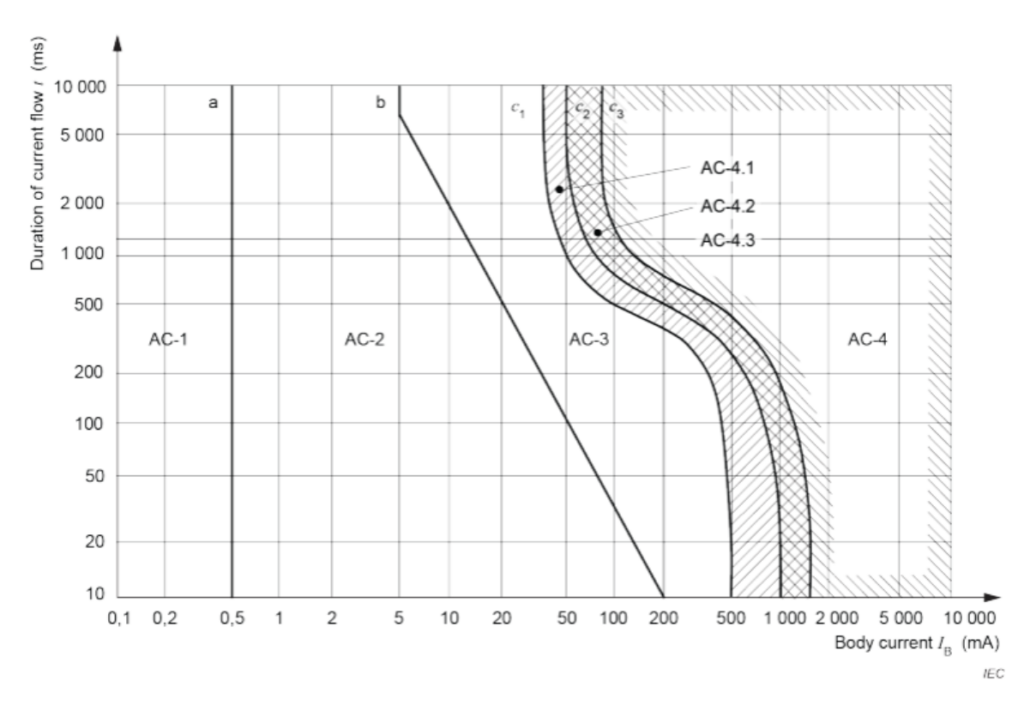
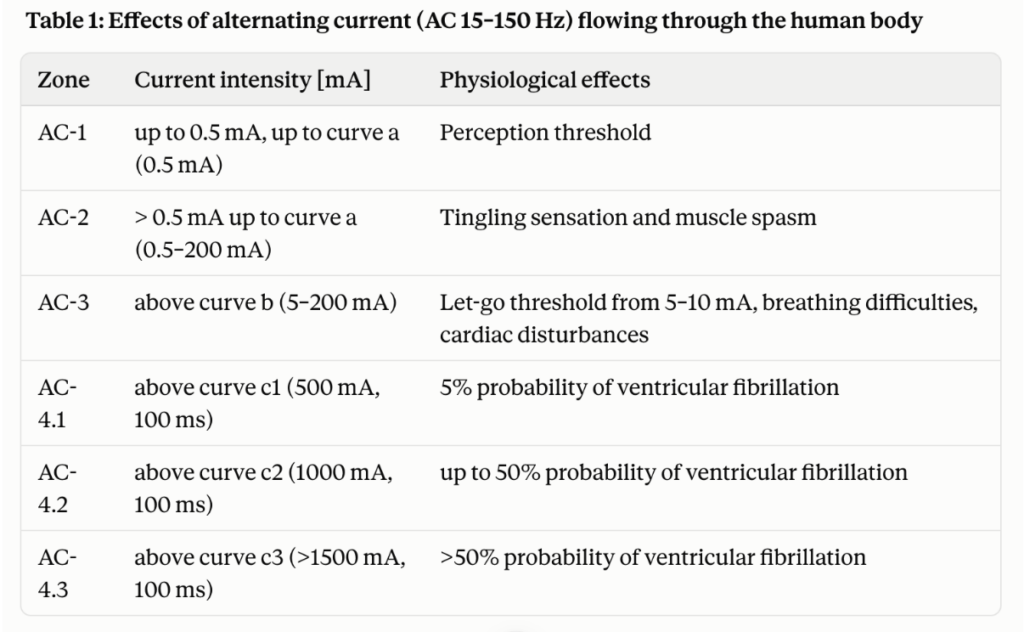
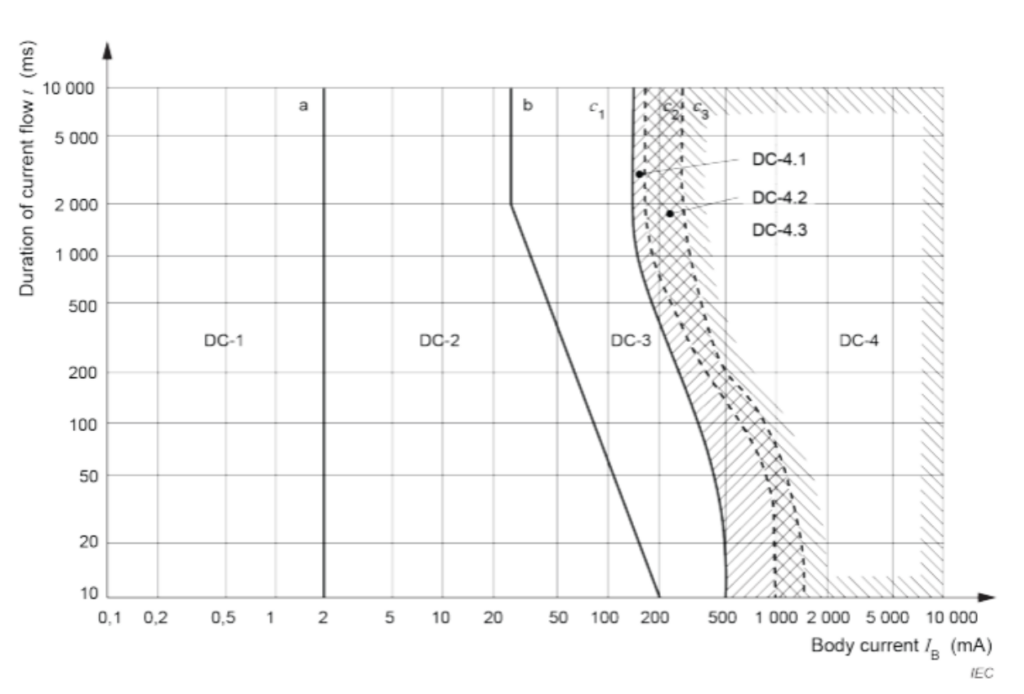
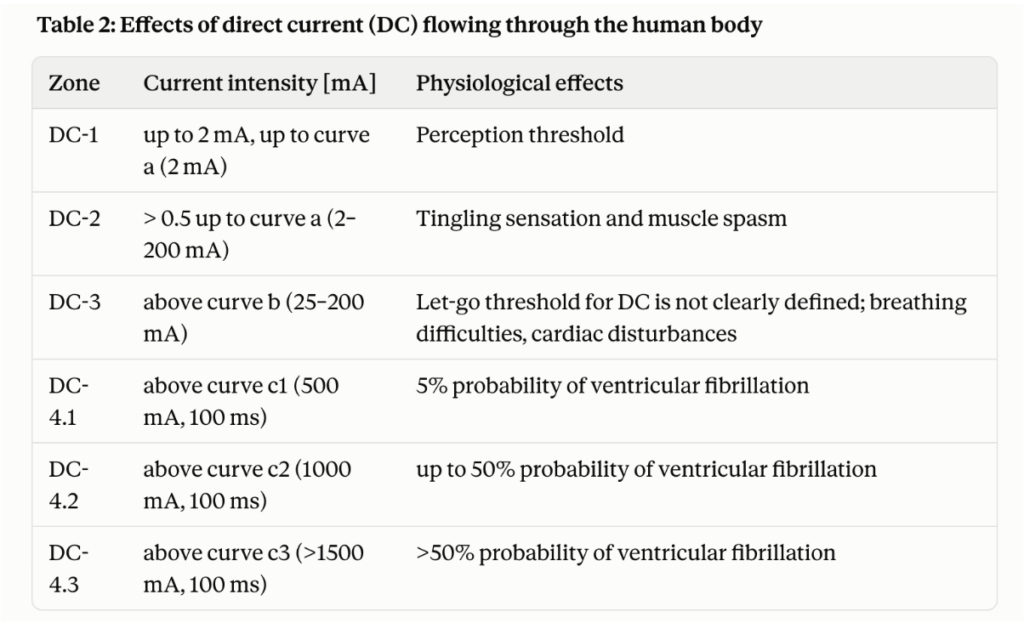
Electric shock from alternating or direct current occurs when a current flows through the human body at an intensity that causes negative effects. Unfortunately for us, the dangerous current intensity starts at very small values, on the order of 5 mA. That is 5/1000 of an ampere, whereas an average household kettle with a power of 2000 W needs ~9000 mA to operate. And that’s just one kettle. This example is meant to show how widespread the risk of electric shock actually is. We talk about the risk of electric shock when the voltage in an installation or device exceeds a certain value (according to PN-EN-50110-2013, note: a new edition of the standard from 2023 already exists):
- 50V AC under normal conditions, or 25V AC under special environmental conditions
- 120V DC under normal conditions, or 60V DC under special environmental conditions
The effects of electric shock depend largely on:
- The intensity of the shock current
- The duration of current flow
- The path of current through the body
- The type of current (direct, alternating, high-frequency)
- The type of skin contact
2. Electric arc
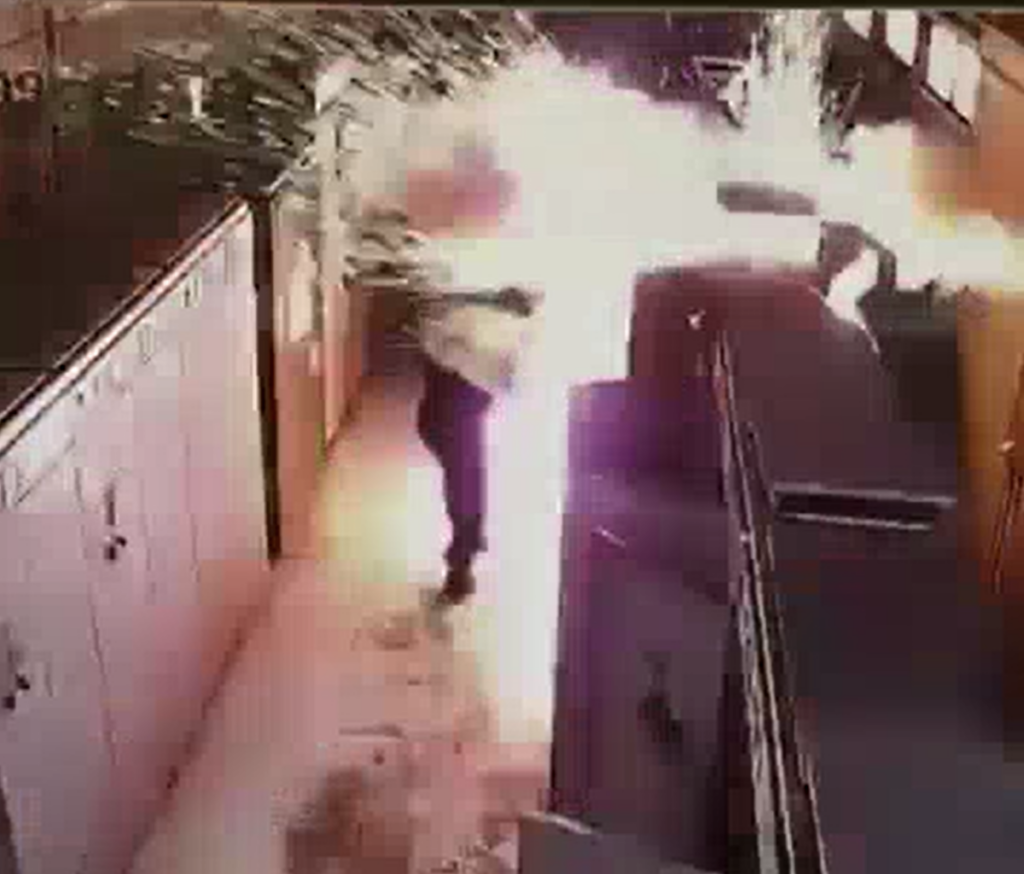
The electric arc represents a particular hazard in electrical installations. I will write about arc flash hazards in more detail in future articles. What’s important to remember now is that arc flash hazard:
- Occurs in low-voltage installations (up to 1000V AC and 1500V DC)
- Occurs in medium- and high-voltage installations (>1000V AC and >1000V DC), e.g. switchgear or 15 kV substations
- Its hazard level is determined by calculation, not by measurement
- Requires the use of appropriate PPE (personal protective equipment) protecting against the thermal effects of the arc
- Electric shock and arc burns can occur simultaneously, but not necessarily
The main effects of arc exposure are:
- Thermal burns up to 4th degree
- Eye damage (from temporary blinding to complete loss of vision)
- Hearing damage
- Mechanical injuries from flying debris/fragments
- Poisoning from toxic gases
3. Fires and explosions of electrical origin
Fire and explosion hazards are very common elements, not only in industry. In fact, preventing fires in electrical installations is one of the fundamental considerations during their design. This largely concerns situations related to:
- Installation overload – excessive power relative to the installation’s capacity and the resulting temperature rise
- Electrical short circuits – a very high fault current causing a temperature rise and/or mechanical damage
- Electric arc – direct effect of temperature >5000°C (electric arc ~19,400°C)
- Sparking – damage to cables, damage to motors
- Static electricity – causes ignition of dust and gases
4. Electromagnetic field (EMF)
The electromagnetic field is an increasingly noticeable hazard in the workplace today. The main sources of EMF are:
- Medium- and high-voltage power lines
- Industrial equipment (chokes, induction furnaces, MV switchgear)
- Telecommunications equipment
- Advanced electronic systems
The direct biophysical effects of EMF on the human body (per the relevant Polish Journal of Laws, item 331) include, among others:
- Thermal effects – heating of tissue due to the absorbed energy of EMF (electromagnetic field)
- Non-thermal effects – stimulation of muscles, nerves or sensory organs, which may have a harmful effect on mental or physical health; stimulation of sensory organs can lead to temporary symptoms such as dizziness or visual sensations, which may cause temporary discomfort or affect cognitive or other brain or muscle functions, thereby potentially affecting the ability to work safely
- Induced limb currents – capacitive currents induced directly in the body, flowing through the limbs
In accordance with EU Directive 2013/35/EU, as well as Polish regulations (Polish Journal of Laws item 883), employers are obligated to:
- Systematically measure electromagnetic field intensity
- Identify areas of increased risk
- Implement effective protective measures
- Conduct employee training
Legal and Normative Framework
Key documents regulating electrical safety in the EU:
- Directive 2009/104/EC (minimum OSH requirements)
- EN 50110-1 (Operation of electrical installations)
- HD 60364 (Low-voltage electrical installations)
- IEC 60479-1 (Effects of current on human beings and livestock – Part 1: General aspects)
- And quite a number of foreign publications and standards
Summary
Understanding the basic electrical hazards is key to ensuring safety in the workplace. In the following articles of this series, we will discuss in detail each aspect of electrical safety, focusing on practical solutions and protection methods.
Key points to remember:
- Electric shock and arc burns account for the majority of electrical accidents
- The effects of shock depend on the current and the duration of exposure
- Arc flash hazard requires calculation

Marcin Ruta
Electrical Safety Consultant
MR Power Systems